No-Nonsense Breakfast Recipes to Help Keep You Full Until Lunch
Introduction
Did you know that what you eat for breakfast can influence what you eat for the rest of the day? If you start your day with an unbalanced meal, one that is high in simple carbohydrates and free sugars but low in fibre and protein, such as a bowl of granola or a couple of slices of toast, you are more likely to feel hungry by mid-morning and your food choice can also contribute to poorer food choices later in the day.
This can happen for a number of reasons. Firstly, we may simply not be eating sufficient calories first thing in the morning, but also we may have jumped on the blood sugar roller coaster, a ride that can affect mood, concentration and, most importantly, appetite.
This means the impact of your food at breakfast can still have an impact later on in the day and if it is not a balanced choice, it can make it harder for you to regulate your appetite and also your weight. In my clinic, many of my breakfast skippers are often my most dedicated sofa snackers at the end of the day. Missing out on vital nutrition early on can mean that the body dials up your appetite later in the day.
The key to feeling full right up to lunch is to make sure that you are consuming sufficient calories at breakfast. Many commercial cereals deliver just 150–200 kcals per bowl and while some of these can be part of a balanced breakfast, they mostly supply fast release carbohydrates and too few calories to keep us satisfied. This makes it harder for us to fire on all cylinders, and we often run out of energy mid-morning.
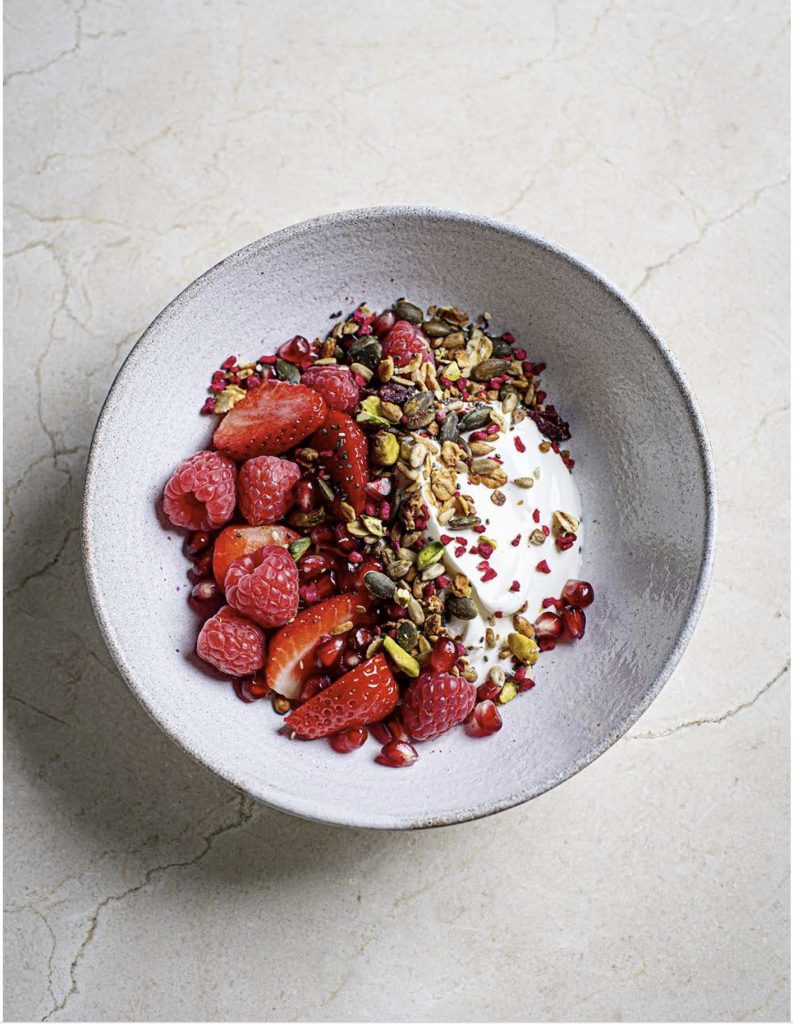
But adding some thick Greek yogurt to your granola to top up the protein, a tablespoon of milled flaxseeds to increase the fibre, some berries for extra fibre and polyphenols, and perhaps a drizzle of nut butter for healthy fats, quickly turns an unbalanced breakfast into a satisfying, balanced one.
Are you eating enough at breakfast?
Not eating enough at breakfast can often backfire, leading to mid morning hunger and low energy levels, which may cause you to move less and burn fewer calories throughout the day. It can also affect focus and increase food noise.
This can then cause the body to ramp up appetite signals, leading to cravings for quick fix foods. While these can feel satisfying in the moment, they can start a cycle of snacking throughout the day, often resulting in us eating more calories than we actually need.
For some women skipping breakfast entirely, or swapping breakfast for a takeaway latte, (does this sound familiar?), can leave us running on empty. Stress hormones can flood the body to keep us going in the absence of food, which can feel good in the moment, but is very different from feeling properly nourished.
Skipping breakfast entirely can feel like a quick fix for maintaining or even losing weight, but this does not always work in the long term. Studies suggest that people who eat earlier in the day and finish eating earlier in the evening may benefit from a range of metabolic improvements, including better blood lipid levels, improved blood sugar regulation and even improved sleep.
How to create a balanced breakfast
When planning your breakfast, try to remember the importance of protein, fibre and healthy fats to properly fuel the body after our night time fast. Protein provides a fresh supply of amino acids, supporting repair and regeneration, hormone, enzyme and neurotransmitter production, while also slowing digestion and stabilising blood glucose, which in turn reduces mid-morning hunger, cravings and food noise
Fibre works alongside protein by adding bulk to the meal and slowing gastric emptying, leading to a more gradual release of glucose and more sustained energy. We are currently recommended to eat 30g fibre a day, but with most of us only managing around 18g – and as many as 96% of the population are still lacking fibre.
If you can lead with fibre at breakfast it becomes easier to meet your daily fibre goals, and means you can balance your fibre equally between your meals (around 10g per meal). Together, protein and fibre switch on satiety signalling, helping you feel fuller for longer, snack less, and maintain more consistent energy, mood and focus across the day.
Over the years, there has been a lot of debate about whether breakfast really is the most important meal of the day, but what really matters is the food you choose to eat at breakfast. We want our breakfast to be balanced with the right macronutrients. but also rich in essential micronutrients, like vitamins and minerals.
These micronutrients help to drive the biochemical reactions in the body that support all areas of health, helping the body to feel and function at its best. Eating foods that are nutrient dense is therefore more likely to support our health and overall wellbeing.
Some studies suggest that we should be aiming to consume 30-40% of our total calories at breakfast (this could be between 400-600kcals for most women). One such study indicated that front loading of calories could lead to lower BMI, lower weight, lower triglycerides and even better blood sugar control, measured by HbA1c.
Is calorie counting affecting your breakfast choice?
In my clinics, I work on breakfasts that contain 350-600kcals per serving and around 350-400kcals for weight loss. This may surprise you, but we have to look at food as nourishment and not just energy. The average woman will use around 1200-1500 kcals daily for basic functions such as repair and regeneration, digestion, temperature regulation, brain activity, and supporting our internal organs. Our heart is always pumping and our lungs continue to breathe; all of these activities require energy.
Your activity calories sit on top of this which brings our daily calorie needs up to around 1800-2500, depending on how active you are. But even this is not an exact science. Your total calories are dependent on your size, your age, your amount of lean body mass, your activity levels and to some extent your gut health and genetics. This can vary our personal calorie requirements daily and means that we don’t actually burn the same amount of calories each day – it depends on what we are doing each day that really counts. So, in reality, some days we might burn 2,500kcals and other 1,600.
Regularly eating below our basic calorie needs can leave us feeling tired, apathetic and low in energy, which can then impact our motivation to exercise, walk and burn those extra calories. In other words, the less food we consume, the less active we can sometimes become. If we are trying to lose weight this can seriously impact our success.
Seeing breakfast as fuel and nourishment to help us feel our best can start to put its role into perspective. After a 12–14 hour overnight fast, the body will often thank you for a nourishing, nutrient dense breakfast. You may even find it easier to manage your weight, not harder.
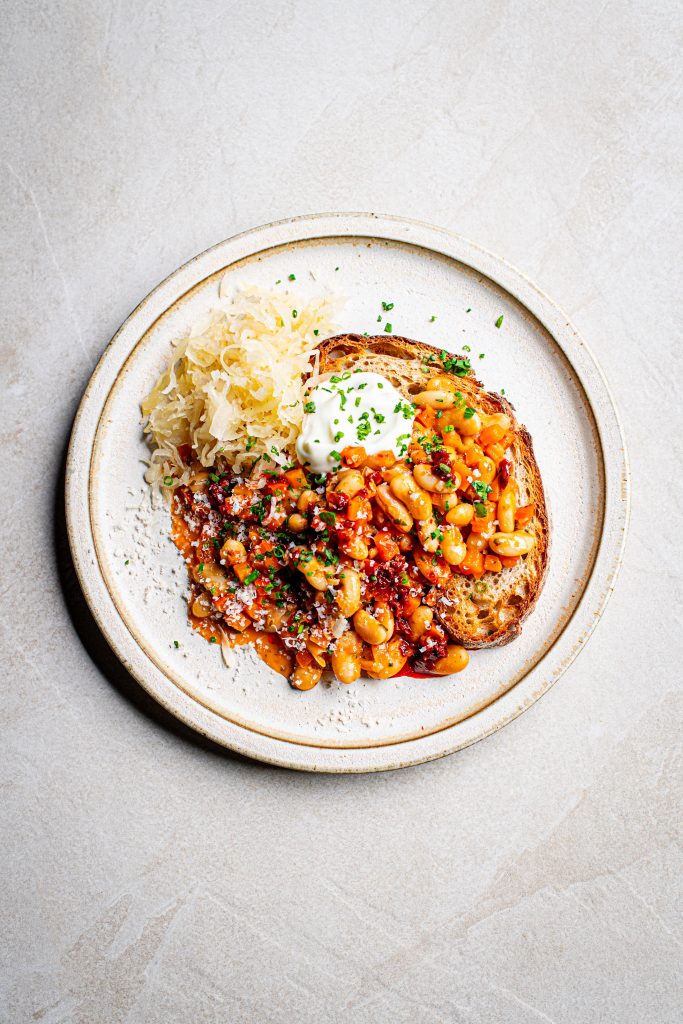
Sunrise Sprinkles and Harissa Beans on Toast
Sunrise Sprinkles
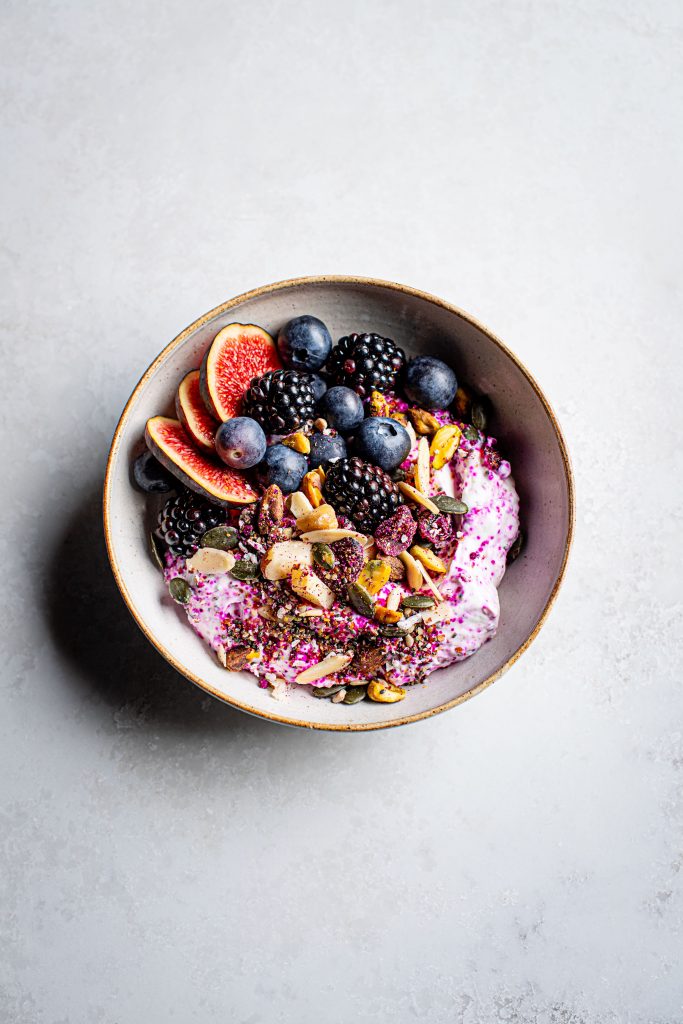
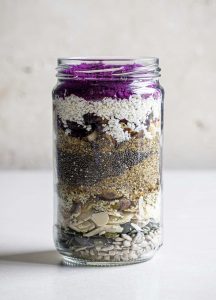
This is a simple and delicious way of eating more plants and is a true gut-boosting breakfast. This sunrise mix looks stunning in the jar and even better in your breakfast bowl. The addition of dried berry powders brings both a burst of colour and natural sweetness. I used pitaya powder, which is made from dried pink dragon fruit and can be sourced from lots of online retailers. The vibrant pink colour comes from betacyanins, which are polyphenols and antioxidants. You can easily swap this for dried cranberry, blueberry or acai powder, all of which work brilliantly.
Ingredients
(50G PER SERVING)
25g sunflower seeds
25g pumpkin seeds
25g almonds, chopped or flaked
25g milled flaxseeds
25g pistachio nuts
25g milled hemp seeds
25g chia seeds
25g Brazil nuts, roughly chopped
25g walnuts, roughly chopped
25g dried cranberries
25g coconut flakes
25g one of the following:
dried pitaya powder, acai, cranberry or blueberry powder
Method
1. Put all the ingredients into a large jar. You can layer them one at a time to create a striking visual effect and then shake the jar before using.
Storage: Store in an airtight jar in a cool, dry place and use within 3 weeks.
No-Nonsense Nutrition
If you want to learn more No-Nonsense Nutrition tips, balanced recipes and simple habits for real life, then please take a look at my NEW book No-Nonsense Nutrition.
No-Nonsense Nutrition is a culmination of the latest science and my last 20 years of clinical practice, dovetailed into one powerful book created to get you into the kitchen.
With six intuitive principles to help you create a perfectly balanced plate, in the right proportions, everyday…with no fuss or calculations.
All meals are created with balance in mind, which means you can choose from any breakfast, lunch or dinner knowing that it’s been balanced for you and you will be nourished for the whole day.
I also created the book to help you:
✔️ SIMPLIFY the science to make eating well easy
✔️ Create recipes with the magic duo – PROTEIN and FIBRE
✔️ Reduce inflammation and promote a healthy gut microbiome
✔️Boost your body’s natural GLP-1, the hormone that signals fullness, making weight loss easier
✔️ Feel full for longer, reduce food noise and eliminate food cravings for good
✔️ Increase your energy and sleep better, improving your health noticeably in less than two weeks
Every recipe follows my Triple 30 Principes
🎯30g protein per meal. 🎯30g fibre per day 🎯30+ plants a week
 Buy No-Nonsense Nutrition HERE
References:
Pérez-Vega, K.-A., Lassale, C., Zomeño, M.-D., et al., 2024. Breakfast energy intake and dietary quality and trajectories of cardiometabolic risk factors in older adults. Journal of Nutrition, Health & Aging, 28(12), p.100406. https://doi.org/10.1016/j.sphs.2024.09.001
Bermingham, K.M., May, A., Asnicar, F., Capdevila, J., Leeming, E.R., Franks, P.W., Valdes, A.M., Wolf, J., Hadjigeorgiou, G., Delahanty, L.M., Segata, N., Spector, T.D. and Berry, S.E., 2024. Snack quality and snack timing are associated with cardiometabolic blood markers: the ZOE PREDICT study. European Journal of Nutrition, 63(1), pp.121–133. https://doi.org/10.1007/s00394-023-03241-6
Jakubowicz, D., Wainstein, J., Ahren, B., Landau, Z., Bar-Dayan, Y. and Froy, O. (2015) Fasting until noon triggers increased postprandial hyperglycemia and impaired insulin response after lunch and dinner in individuals with type 2 diabetes: a randomized clinical trial. Diabetes Care, 38(10), pp.1820–1826. https://doi.org/10.2337/dc15-0761
Disclaimer:
Features published by Dominique Ludwig are not intended to treat, diagnose, cure or prevent any disease. Always seek the advice of your GP or another qualified healthcare provider for any questions you have regarding a medical condition, and before undertaking any diet, exercise or other health-related programme. Please refer to our Terms and Conditions and Medical Disclaimer for more information as well as our Website Terms and Conditions.Written by Dominique Ludwig