Iron: Everything you need to know
Introduction
This is the title of a research paper that was published in Frontiers in Nutrition, highlighting how widespread Iron deficiency is in UK adults. The iron-ically unwell paper found that iron deficiency is a global healthcare burden affecting almost 25% of the population and around 30% of women. The paper appears timely as it coincides with new guideline thresholds for ferritin set by the American Society of Hematology, or ASH, for diagnosing iron deficiency.
ASH reports similar figures, estimating that iron deficiency affects 10 million adults in the U.S. and 2 billion people worldwide². However, many cases go undiagnosed, with up to 70% missed among high-risk populations³ because of limited screening and variability in diagnostic reference ranges.
These new figures use thresholds that aren’t used in the UK yet, but the new US guidelines have caused quite a stir and got everyone talking about ferritin. Importantly, the new thresholds identify iron insufficiency before the body becomes completely depleted or anaemic. Think of it as pre-anaemia, where symptoms can be present, but the body has not yet reached the depletion required for an anaemia diagnosis.
Let’s dive deeper to understand what we need to know about iron, what we can do if we suspect we are low, and which foods can support our iron levels.
Let’s get the terms right
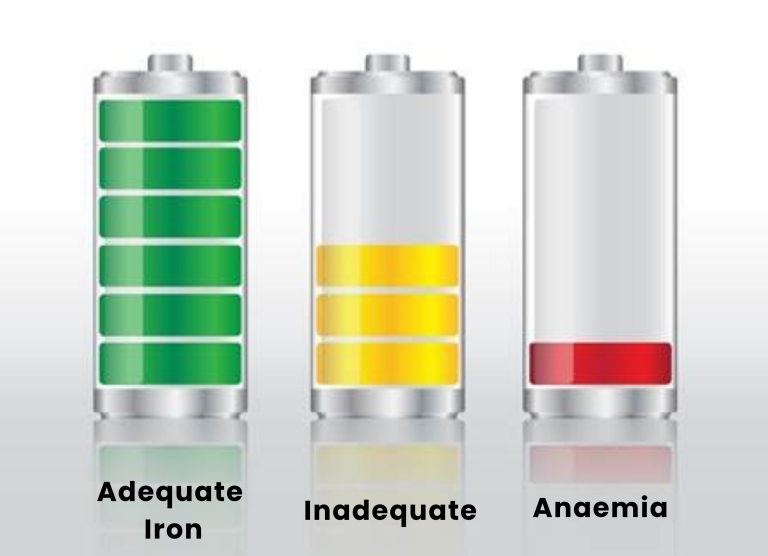
Iron deficiency, as discussed by ASH and in the Randox paper, refers to depleted iron stores based on ferritin, alongside other blood markers and symptoms, often when the more traditional marker, haemoglobin, is still in range.
This is not the same as anaemia, but is a stage where symptoms are often still present and the risk of becoming fully anaemic is much higher.
Anaemia refers to our haemoglobin, and is diagnosed when haemoglobin has fallen below range. As a result, people can experience symptoms such as fatigue, weakness, and shortness of breath. This is the final stage of depletion.
In the UK, estimates of anaemia are thought to affect around 7% of the population – with both women and men combined. This risk is higher in women than men.
Why does iron affect our haemoglobin?
Iron forms part of the haemoglobin molecule in our red blood cells. Each single haemoglobin molecule contains four atoms of iron that bind directly to oxygen so that each haemoglobin molecule can carry up to four oxygen molecules at the same time.
What do values on a blood test for iron mean?
A blood test can be complicated to read, as there are many values that look at iron. It is best to look at them all, rather than take just one in isolation, and always in context of symptoms.
The most important iron values on our blood test include:
Haemoglobin – This measures the oxygen carrying protein in red blood cells, but it’s a late marker, as it often stays normal until iron deficiency is advanced. This can be an indicator, but since it does not look at iron saturation or iron stores, it is not always reliable as a stand-alone marker.
Transferrin saturation – This shows what percentage of our iron transport protein is carrying iron, giving a clearer picture of how much is available for the body to use.
Total iron-binding capacity (TIBC) – This tells us how much capacity our blood has to carry iron, and it tends to rise when stores are low as the body tries to compensate.
Serum ferritin – This reflects how much iron we have stored in reserve, making it the most useful marker for detecting depletion before other results change. However, there is a caveat with ferritin: if ferritin is high, it is always best to cross-check with CRP, as this result may elevate ferritin showing a false-high result.
CRP (C-reactive protein) – This is not an iron marker, but it’s worth running alongside ferritin on a blood test. CRP is an inflammatory marker that can increase when the body is in an inflammatory state, for example, if we are fighting an infection, or if we have an inflammatory health condition. Infections/ inflammation can result in more iron being sent into the storage i.e. ferritin. This elevation in ferritin can mask a deficiency, especially if we are relying on a single one-off test result. If ferritin and CRP are both raised, a repeat test is normally recommended. Timing matters, so ferritin may not be accurate, even if we have a common cold.
How is iron deficiency determined and how is the cut-off different
WHO (world health organisation)
The WHO uses haemoglobin to diagnose anaemia

Multiply this by 10 to convert to g/L, i.e. ≤120 g/L for females, ≤130 g/L for males).
NHS Guidelines: The NHS still mostly uses the WHO recommendations for Haemoglobin.
While some people are picked up and treated earlier, others are not, meaning many cases are only confirmed after iron stores are completely depleted. The NHS has not yet adopted the ASH guidelines and mostly uses haemoglobin as the main iron marker to diagnose deficiency, rather than ferritin. However, when looking at ferritin, many doctors mostly agree that:

American Society of Hematology (ASH) Guidelines:
The ASH guidelines highlight that lower ferritin levels may indicate deficiency at levels of
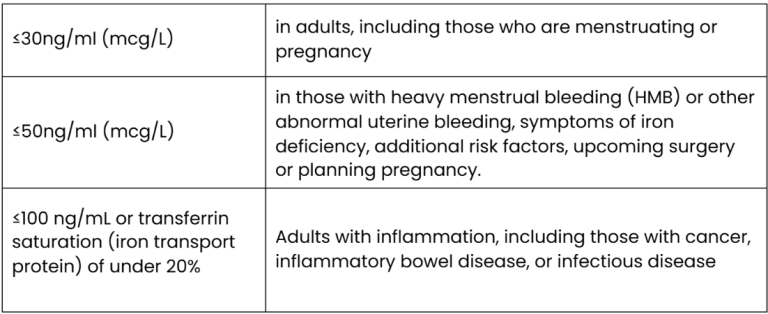
These newer guidelines are intended to catch more cases of iron deficiency earlier.
According to the ASH, iron deficiency affects an estimated 10 million adults in the U.S. and 2 billion people worldwide³.
But we also have to look at symptoms and identify a reason why someone might have iron deficiency.
Iron deficiency anaemia symptoms
- Tiredness and Fatigue. This is the most consistently reported symptom, caused by reduced oxygen delivery to tissues as haemoglobin falls.
- Shortness of breath on exertion, lethargy. The body may compensate for reduced oxygen carrying capacity by increasing our effort when breathing.
- Headache and dizziness. This is thought to be linked to reduced oxygen supply to the brain.
- Palpitations. The heart may work harder and faster to compensate for lower oxygen delivery.
- Hair thinning. Poor blood flow to the hair follicles can sometimes contribute to hair loss.
- Pallor. As haemoglobin drops, sometimes the skin may pale, including the inner eyelids (conjunctiva) or even the nail beds. Severe deficiency can lead to spoon-shaped nails, also known as koilonychia.
Is Ferritin- face real?
Some people on social media are using a term called ‘ferritin face’ but this is not a medical term. It can be misleading, as iron deficiency cannot be diagnosed by simply looking at someone’s face. Dark circles, tired skin, and dullness can have other causes and are not a reason to start iron supplementation without a blood test. It is important to see your GP for further investigations if you think you might be depleted.
Functions of Iron in the body
The total iron in the body weighs about as much as a small nail (3- 4g), yet it’s not held in one place. It’s spread throughout our blood, muscles, and organs.
- Iron forms part of our haemoglobin. Red blood cells distribute oxygen to tissues throughout the body. If we lack iron, we will produce less haemoglobin, and therefore supply less oxygen to our tissues.
- Iron is also an important constituent of another protein called myoglobin. Myoglobin is found in muscle tissue (skeletal and cardiac). Rather than moving oxygen from A to B like haemoglobin, myoglobin stores a reserve of oxygen within the muscle cells for use during activity.
- Energy production. Iron is a required cofactor for enzymes in the mitochondria, meaning it’s directly involved in how our cells generate energy (ATP, adenosine triphosphate), the body’s main energy currency.
- Neurotransmitter synthesis. Iron is a cofactor for enzymes used to synthesise neurotransmitters such as dopamine. Without adequate iron, this enzyme cannot function efficiently, meaning dopamine production itself may be reduced. Other neurotransmitter enzymes also require iron to produce serotonin, adrenaline, and noradrenaline.
- DNA synthesis. Iron-dependent enzymes support cell division and DNA replication, which helps explain why deficiency affects rapidly dividing tissues, including red blood cells.
- Immune function. Iron is necessary for normal immune cell proliferation and function, but during acute infection the body deliberately limits irons’ availability, by shifting iron into the iron stores (ferritin). The body does this because many pathogens also need iron to grow and replicate.
- Iron works as a co-factor in many chemical reactions in the body, including enzymes that support thyroid function, liver detoxification, and the antioxidant enzyme catalase.
Who Is Vulnerable to Iron Deficiency
Some groups of people are more at risk for iron deficiency than others. Women are around 5 times more likely to experience iron deficiency than men, due to their unique biology. The most common cause is blood loss in women, where the diet cannot keep up with monthly losses. However, the root cause of low iron should be identified if possible to prevent it from becoming a repetitive health problem.
- Women of reproductive age: monthly menstrual blood loss and heavy periods can lead to increased iron requirements to replace lost blood cells. Loss of iron through blood loss means that the body has less iron to recycle, and these losses must be made back throughout the month. Blood contains around 41-51mg iron per 100ml, so heavy periods can lead to more significant iron losses. A normal period is classed as losses of around 30-40ml whereas NICE (National Institute for Health and Care Excellence) guidelines define heavy periods as more than 80ml blood loss per cycle.
- Pregnancy: during pregnancy there is an increased need for iron to support additional maternal blood volume and the baby’s development.
- Postpartum: Blood loss during birth and the following weeks, alongside the demands of breastfeeding and recovery, can increase iron requirements.
- Poor dietary intake: diets low in iron-rich foods can lead to lower dietary intake. Over time, this can lead to a shortage of iron in the body.
- Vegan and vegetarian diets: more care may be needed on plant-based or vegetarian diets; however, it is possible to reach optimal iron status on both diets.
- Gastrointestinal conditions: any gut condition which leads to incomplete absorption of iron, such as coeliac disease, or conditions where the gut lining has been damaged, such as inflammatory bowel disease (IBD), ulcers or colorectal cancer. Low stomach acid can also affect how well iron separates from food, making it ready for absorption. Helicobacter Pylori infections in the stomach may also contribute.
- Frequent blood donations: repeated donation may deplete stores over time if dietary intake is not sufficient.
- Endurance athletes: some endurance athletes can be at higher risk for iron deficiency through increased demand. Low iron levels can negatively impact training quality and athletic performance before anaemia develops.
- Infants, children and teens: rapid growth increases iron requirements that need to be met through diet.
- Long-term use of medications such as proton pump inhibitors (PPIs), may also affect absorption, and GLP-1 medications affect appetite, potentially lowering iron intake.
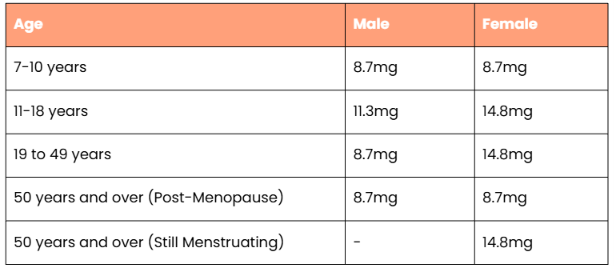
Absorption of iron
Iron is not completely absorbed, even in those with good digestion. This means we absorb less than we actually consume. Its absorption can also be affected by other foods consumed at the same meal.
Haem vs Non-Haem Iron
Dietary iron comes in two distinct forms. Haem iron (Fe2+) is found in animal foods, such as meat, poultry, and fish, as well as egg yolk and, to a lesser extent, dairy. It’s absorbed directly in the gut wall and is largely unaffected by other foods eaten alongside it.
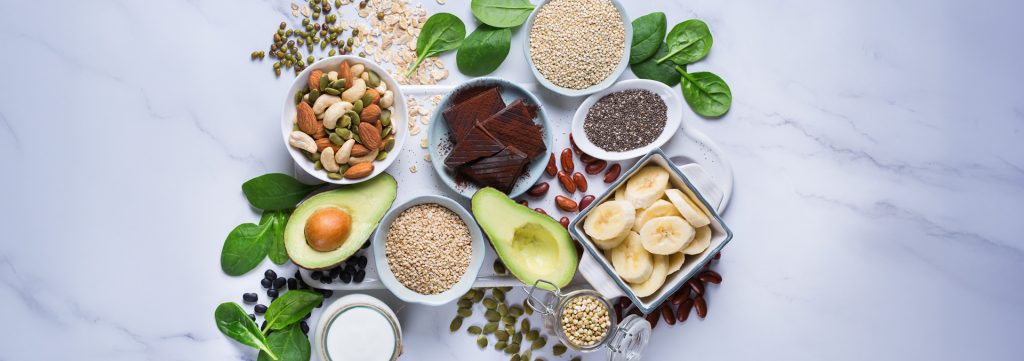
Non-haem iron (Fe3+) is the form found in plant foods such as leafy greens, legumes, wholegrains, nuts and seeds, soy products, as well as fortified foods. It is absorbed differently, and its uptake is far more variable, depending on what else is present in the meal.
What increases non-haem iron absorption
Vitamin C is the most well-established enhancer, working by converting non-haem iron into a form that’s easier for the gut to absorb. Pairing iron-rich plant foods with a source of vitamin C, such as citrus fruit, bell peppers or tomatoes, can meaningfully improve uptake from the same meal.
What reduces non-haem iron absorption
- Phytates, found in wholegrains, legumes, and nuts, can also bind irreversibly to some of the iron we consume. However, these interactions are mostly unavoidable – they reduce but do not block absorption, so the body does and can use non-haem iron.
- Tannins and Polyphenols, found in tea, coffee, and some herbal infusions, have a similar inhibitory effect, which is why timing these drinks away from iron-rich meals is often recommended.
- Calcium can reduce iron absorption. This doesn’t mean we should stop eating iron-rich foods, like seeds, with yoghurt, but we should avoid our iron supplement with a large bowl of yoghurt.
Getting into the bloodstream
Iron gets from your gut to the bloodstream by passing through ‘doors’ in the gut lining. Once inside the cell, it then passes through another door called ferroportin, where it is picked up by a taxi called transferrin, which transports it around the body.
Hepcidin – does this put the brakes on iron absorption?
This is a hormone made in the liver and acts as the master switch for iron absorption in the body. It works by binding to the ferroportin exit doors on the cells in the gut. This closes the door and keeps the iron in the cell so that less can be absorbed, effectively trapping the iron in the gut lining.
The body makes more hepcidin when iron levels are HIGH, and less when we are LOW. This is called a feedback loop. However, problems start when hepcidin is raised for other reasons. Infection and inflammation can raise hepcidin as a deliberate defence mechanism to keep iron away from the bacteria.
Supplementation of iron can also increase hepcidin, effectively reducing the amount of iron we absorb at our next dose; these effects last around 24 hours. I discuss this in more detail under supplementation, as this is not as clear-cut as taking your iron supplements every other day.
The iron recycling centre
The body is not wasteful with iron, in fact, it has an excellent recycling programme. Red blood cells last around 120 days, they are broken down at the end of their life by white blood cells called macrophages; this mostly happens in the spleen. When this happens, the freed iron gets absorbed again, and hops back into its transferrin taxi where it is taken to the bone marrow to build more red blood cells.
It is estimated that around 20-25mg of iron moves through this cycle every day.
Which foods contain the most iron?
Iron is found in the following foods. I have listed them with some of the richest sources at the TOP of the list. Note that many plant sources (marked in green) are excellent sources of iron, but also that these amounts are listed as they occur in the food per 100g. We may consume 100g steak quite easily, however we are unlikely to consume 100g dark treacle in one sitting.
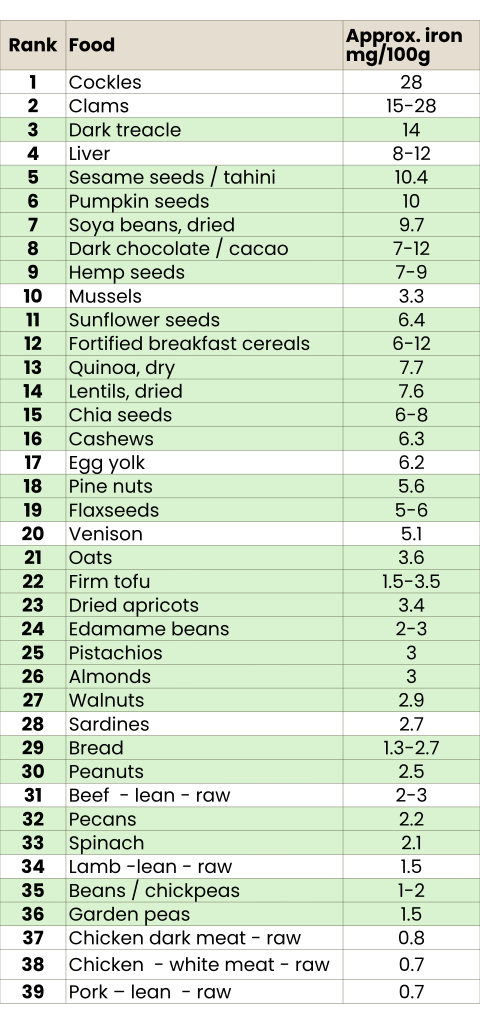
*approximate iron amounts using CoFID data (UK data)
Note on Spinach! Thought to be behind the cartoon character Popeye’s strength, spinach was celebrated for its exceptionally high iron content until the 1930s, when a decimal-place error was discovered in the calculation, which had originally inflated the iron by tenfold. It is still a high-iron vegetable, just not quite as high as previously thought!
So, are we really iron-ically unwell?
The ASH guidelines are the biggest step forward we have seen in early diagnosis of iron deficiency for decades.
This offers a wider debate about how iron deficiency and anaemia might be treated in the future.
The ironically unwell article is peer reviewed (a standard of quality); but rather than being a randomised control trial, this is an analysis of data from Randox, a blood testing laboratory and shows the results of over 33,000 subjects.
ASH based its findings on studies comparing blood ferritin with bone marrow iron which is considered to be the gold standard in testing. But this is more invasive than blood tests.
I fully support early recognition of low iron status, which highlights the broader issue of picking up those likely to go on to develop anaemia earlier and supporting people, who have low iron stores and are at risk of being fully depleted before diagnosis by the WHO criteria, many of whom may already be experiencing symptoms.
So, who is right?
Usually this is down to methodology and how anaemia is classified, with true iron deficiency being easier to diagnose than suboptimal levels, which require more detailed interpretation. It’s not a case of right and wrong – one is looking at earlier diagnosis where symptoms are often present rather than the end point of anaemia.
Is ferritin the elephant in the room?
To some extent, yes. The problem with ferritin stores is that the healthy range stretches from around 11 to 310 µg/L for female adults and 24-340 µg/L for men. However, as mentioned earlier, infections can artificially elevate ferritin, so repeat testing may be necessary alongside cross-referencing with other markers.
Optimal levels are thought to be above 50 µg/L, and practitioners generally agree that levels below 30 µg/L are sub-optimal. Although it is undecided, levels around 70-90 µg/L may be the healthiest alongside a normal CRP.
The ‘issue’ with ferritin is that, as stores dwindle, haemoglobin can often remain in the normal range, and we may only see depletion in blood haemoglobin levels when stores are insufficient. There is a difference between deficiency and depletion.
If you’ve experienced anaemia, you will know only too well that an iron deficiency can take months of supplementation, alongside a diet of iron-rich foods, to correct. For some people, this can take up to a year and, without care, iron can start to decline quickly once supplementation stops.
So, in some ways, seeing a low ferritin score on a blood test, with low-normal iron saturation and low-normal haemoglobin, might better indicate whether someone is more likely to become iron deficient. Identifying cases of suboptimal iron earlier, when symptoms are present, could help prevent anaemia.
You are not just a number
However, there is a caveat here: we also need to be thinking about symptoms, as we are not all created equally. Some people may feel fine with slightly lower iron levels, whereas others may feel the full effects of tiredness, fatigue, or hair loss sooner. This is where a discussion with your health care provider is essential, alongside a more comprehensive approach to iron testing that looks at all iron markers to provide a better clinical picture.
What about the risk of iron deficiency and the risk of Alzheimer’s Disease?
A large-scale study published in Jama Network OPEN in April 2026 tracked 2,200 subjects for nearly a decade. Researchers found that those with low haemoglobin had a 66% higher risk of developing dementia. Around one in 13 participants were anaemic at baseline, this risk increased steadily as haemoglobin levels fell, suggesting this is not just about severe anaemia but may extend into the lower end of the normal range.
Those with anaemia also showed higher levels of Alzheimer’s related biomarkers. The study measured only haemoglobin, so it cannot tell us whether iron deficiency, B12 deficiency, or chronic disease is driving the effect. However, it does highlight a plausible mechanism that reduced oxygen delivery to the brain over time could potentially increase risk of dementia and more research in this area is clearly required.
Right now, this is too early to say definitively, and this does not prove that anaemia causes dementia; it simply highlights that keeping iron and haemoglobin levels within a healthy range could be one of many modifiable ways to protect long-term brain health.
Supplementing iron
A qualified practitioner/GP can weigh up the correlation between all of your iron blood values to decide whether supplementation is necessary, and whether extra folate or B12 should be given additionally, as we know these are also required for the formation of red blood cells.
- Most iron supplements are best taken on an empty stomach to enhance absorption in the presence of vitamin C
- Take iron away from any thyroid medications as this can inhibit absorption of thyroxine
- Take iron away from tea, coffee and milky drinks as these can lower (but not block) iron’s absorption
- Take away from multivitamins that also contain calcium or zinc as these can also lower absorption of iron.
Nutritional supplements such as iron bisglycinate are lower-dosed as they are better absorbed, and usually fall well below the 60mg level.
So, while taking iron daily can lead to a decrease in absorption on the day, taking iron daily can still result in higher levels overall due the regular dosage.
Alternate day supplementing is often still recommended for those who suffer from side effects from taking iron supplements, but taking every day is likely to still correct deficiency slightly faster.
What is not advised is to split your iron dose across the day, it is better to take it all at the same time.
This advice is correct at time of writing but more studies will help us understand this better.
What is iron overload or Haemochromatosis?
This is a condition on the opposite end of the scale to iron deficiency.
Hereditary haemochromatosis is a genetic condition that causes the body to absorb more iron from food than it actually needs. Essentially, this is a hepcidin problem, where the body does not make enough hepcidin to turn off absorption. Because the body has no natural way to remove excess iron, once absorption consistently outpaces what’s lost, that surplus simply accumulates over time. Individuals who carry the genes for hereditary hemochromatosis may have no symptoms or signs, and the disease is treatable if detected early.
The most common form, hereditary haemochromatosis, is caused by mutations in the HFE gene, most often the C282Y mutation, with the H63D mutation also implicated, usually in a less severe form. These genetic SNPs can be tested to diagnose the condition.
Haemochromatosis is typically managed by a doctor or specialist, often through regular blood removal to reduce iron levels, alongside dietary intervention.
A note on other types of Anaemia - B12 and folate
Anaemia has different types, and not all are linked to iron.
Megaloblastic anaemia is a type of anaemia where red blood cells develop and become enlarged. In this case, red blood cells may continue growing and not divide correctly, resulting in fewer, oversized red blood cells (megaloblasts) rather than the normal number of healthy ones. Megaloblastic anaemia is caused by a deficiency of vitamin B12 or folate, both essential for DNA synthesis and red blood cell formation.
B12 may be low in vegetarian and vegan diets, but it can also be linked to poor absorption. Vegan diets must include B12 supplementation. B12 is abundant in meat and fish but present in smaller amounts in dairy and eggs. In context, eggs and cheese contain around half the B12 of meat and fish per 100g. Some plant foods, such as mushrooms, can contain B12 but do not replace the need for supplementation on vegan diets. B12 requires a compound called intrinsic factor, produced in the parietal cells of the stomach. This escorts the B12 into the bloodstream, facilitating its absorption. If this production is disrupted, for example in the autoimmune disease pernicious anaemia, B12 may also be low. Certain medications such as proton pump inhibitors (PPIs) may also lower stomach acid, which can put us at risk of B12 deficiency as well as iron deficiency.
Folate is mostly found in plant foods but can also be found in egg yolks. Green leafy vegetables, beans and lentils, nuts, seeds and wholegrains are all good sources. Diets low in these foods can result in suboptimal levels.
Occasionally, certain medications or rare metabolic disorders can lower blood folate, but nutritional deficiency is by far the most common cause we see in clinical practice.
These 2 types of anaemia are different; however, this highlights why we need both iron, B12 and folate for healthy blood red cells.
The blood marker used as an early indicator for B12 and folate status is called MCV (mean cell volume).
MCV – when MCV is raised, this can show that the red blood cells are showing signs of enlargement. However, raised MCV does not confirm low B12 and folate status alone. Serum B12 and folate, or urine metabolites of B12 and folate, are more accurate.
However, high folate levels, seen with folic acid supplementation, can sometimes mask a B12 deficiency, as the MCV may appear normal, which means blood test results always require correct interpretation.
This article is downloadable as an ebook with bonus material: 20 high iron meal planning ideas and 4 bonus recipes.
Disclaimer
Features published by Dominique Ludwig are not intended to treat, diagnose, cure or prevent any disease. Always seek the advice of your GP or another qualified healthcare provider for any questions you have regarding a medical condition, and before undertaking any diet, exercise or other health-related programme. Please refer to our Terms and Conditions and Medical Disclaimer for more information as well as our Website Terms and Conditions.
References
- Irvine, A., Watt, J., Kurth, M. J., Lamont, J. V., Dowey, L. R., Fitzgerald, P., Niblock, A., Fairweather, A., & Ruddock, M. W. (2025). Ironically unwell: Anaemia and iron deficiency among health-aware adults in the UK. Frontiers in Nutrition, 12, Article 1679989. https://doi.org/10.3389/fnut.2025.1679989
- Auerbach, M., DeLoughery, T. G., & Tirnauer, J. S. (2025). Iron deficiency in adults: A review. JAMA, 333(20), 1813–1823. https://doi.org/10.1001/jama.2025.0452
- Jefferds, M. E. D., Mei, Z., Addo, Y., Hamner, H. C., Perrine, C. G., Flores-Ayala, R., Pfeiffer, C. M., & Sharma, A. J. (2022). Iron deficiency in the United States: Limitations in guidelines, data, and monitoring of disparities. American Journal of Public Health, 112(S8), S826–S835. https://doi.org/10.2105/AJPH.2022.306998
- The American Society of haematology 2026 I am guidelines. https://ashpublications.org/bloodadvances/article/10/21/7353/570502/American-Society-of-Hematology-2026-guidelines-for
- Moretti, D., Goede, J. S., Zeder, C., Jiskra, M., Chatzinakou, V., Tjalsma, H., Melse-Boonstra, A., Brittenham, G., Swinkels, D. W., & Zimmermann, M. B. (2015). Oral iron supplements increase hepcidin and decrease iron absorption from daily or twice-daily doses in iron-depleted young women. Blood, 126(17), 1981–1989. https://doi.org/10.1182/blood-2015-05-642223
- Fletcher, A., Forbes, A., Svenson, N., & Thomas, D. W. (2022). Guideline for the laboratory diagnosis of iron deficiency in adults (excluding pregnancy) and children. British Journal of Haematology, 196(3), 523–529. https://doi.org/10.1111/bjh.17900
- National Collaborating Centre for Women’s and Children’s Health. (2007). Heavy menstrual bleeding (NICE Clinical Guideline CG44). RCOG Press. https://www.nice.org.uk/guidance/ng88/evidence/full-guideline-pdf-4782291810
- World Health Organization. (2020). WHO guideline on use of ferritin concentrations to assess iron status in individuals and populations. https://iris.who.int/handle/10665/331505
- Scientific Advisory Committee on Nutrition. (2010). Iron and health. TSO. https://www.gov.uk/government/publications/sacn-iron-and-health-report